
Product / Housekeeping
Housekeeping requests without the phone calls.
Room-linked tasks reach housekeeping with a timer, a status and a confirmation back to the guest.
Simulated product UI. Sample data, not customer results.
The problem
Towels, pillows and extra amenities depend on a call from the desk. If it is forgotten, the guest calls again.
How Atithi solves it
Atithi creates the task straight in the housekeeping workspace and starts the clock.
Key capabilities
What it does.
Automatic task assignment
Requests appear in the housekeeping queue.
Room-linked tasks
Every task carries its room number.
SLA timer
A visible countdown on each task.
Task status
Assigned, in progress, completed.
Staff response
Staff accept and update from their workspace.
Escalation
Overdue tasks move up your chain.
Completion confirmation
The guest is told when it is done.
Request history
A searchable record per room.
Operational workflow
How a request moves.
- 01
Guest asks for an amenity
- 02
Task created for housekeeping
- 03
SLA timer starts
- 04
Staff complete the task
- 05
Guest confirmed
- 06
Record stored
Hotel use case
Evening turndown extras
Several rooms request extras at once. Housekeeping sees one prioritised list instead of a string of calls.
Illustrative scenario, not a customer case study.
Related Atithi capabilities
Works with the rest of the loop.
FAQ
Housekeeping: questions
What SLA does housekeeping get?
You set it. A 10 minute target is a common example used in our demos, not a default promise.
Do housekeeping staff need training?
The workspace is task-based. Training scope is agreed during onboarding.
A better way to care for every request
See Atithi on your property.
A walkthrough built around your departments, your timings and your escalation rules.
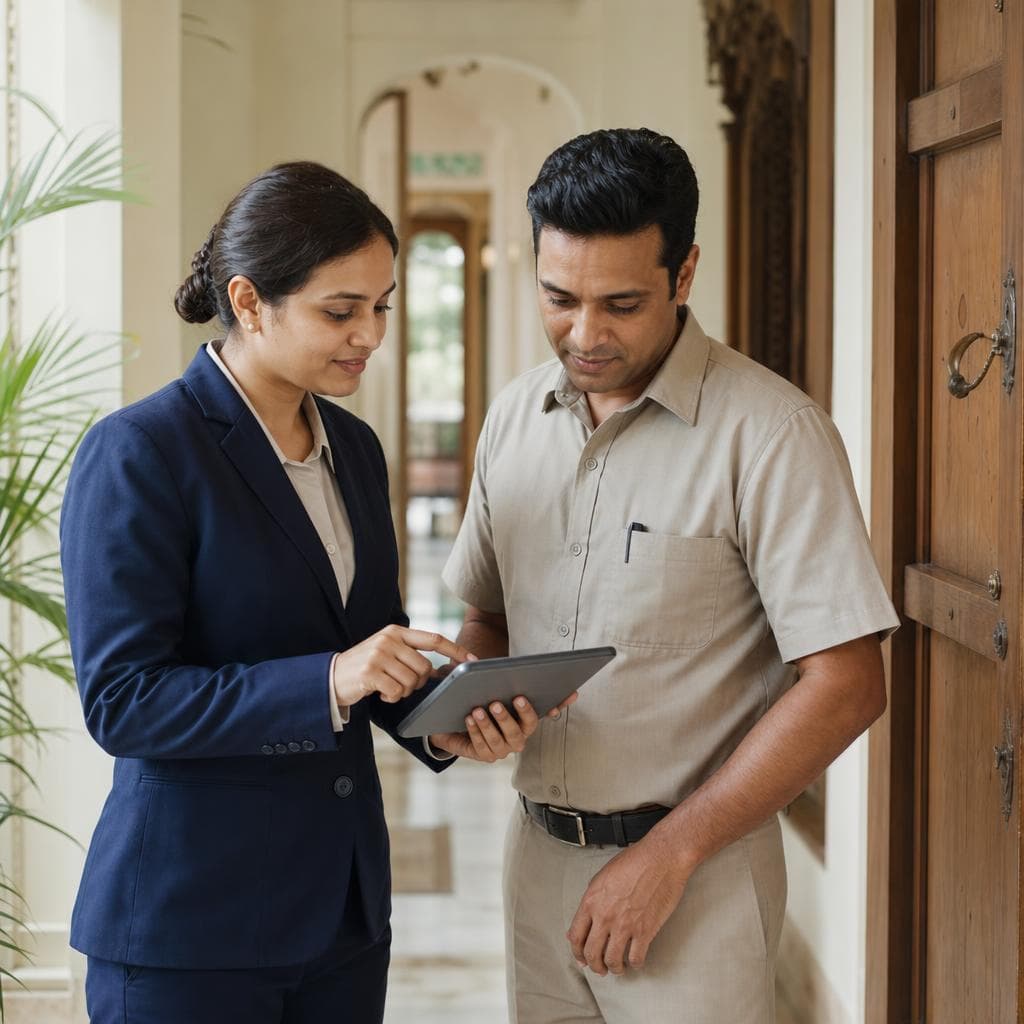 Illustrative hotel workflow
From a guest request to the right team
- 01 Guest asks
- 02 Atithi routes
- 03 Team responds